Will China Vendors Setting Up India Plants Reshape Apple’s Supply Chain
Strategic Shifts in Apple’s Global Supply Chain
As one of the most efficient and global supply networks, Apple’s production is distributed to various countries around the world and now the company is starting to rethink its production locations due to changes in global politics and economies. Recent report that Apple is planning to allow China-based suppliers to open factories in India reflects the company’s strategic hesitation and opportunities. In this article we will elaborate on the implications of Apple’s possible new strategy and resulting changes in production location, by comparing relevant policy and production environments in China and India and speculate about potential production locations in future.
The Context Behind China Vendors Expanding into India?
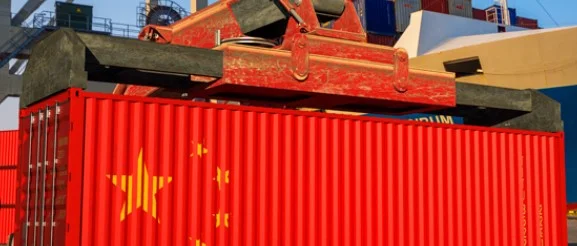
Apple has long relied on Chinese suppliers for the production of its products. For over a decade, China has been the location where Apple could find the lowest cost of labor as well as the most extensive and deepest pool of suppliers of electronics manufacturing services, logistics providers, and technical expertise. However, there have been many recent problems in the model that has been in place for over a decade. As trade tensions have escalated between the U.S. and China, and as the world struggled with the pandemic, for example, there have been a number of production disruptions. In addition, labor costs have gone up in China in recent years, and Apple has therefore started to look for ways to diversify production.
India is emerging as a natural alternative for global manufacturers. The country has a very large and quality-focused workforce, improving infrastructure and also very attractive government incentives. While Apple’s expansion to India does not translate into an exodus from China, it is a strategic move to reduce concentration risk and be more resilient in multiple geographies.
The Indian Government’s Policy Direction
India is taking a cautious yet pragmatic approach to China foreign investment. According to recent news, India is to allow some China vendors — mainly those in the Apple supply chain — to set up local facilities. Those selected will be under strict scrutiny and would likely be required to ensure data security, and also set up a joint-venture with an Indian local partner.
Selective opening up of certain segments of Indian market for the companies from China with advanced components can help India’s drive for technology transfer and creation of robust domestic ecosystem for electronics manufacturing that can service both the domestic market as well as export markets and help in building a self-reliant India.
Implications for Apple’s Manufacturing Ecosystem
Apple has both opportunities and challenges in managing a multi-country production network as it moves to expand its supplier base outside of China.
Rebalancing Supplier Geography
By moving part of Apple’s production line to India, Apple is trying to avoid being too dependent on one country. The supplier map is becoming more diverse and thus Apple is better equipped to handle any global shocks such as trade restrictions or supply chain disruptions. In addition to this, the company will have to adjust the routes to transport the parts, the way to deal with customs, and its entire system of managing inventory across several locations. Most of the components are being produced in East Asia, while the final products are being assembled in South Asia.
To illustrate, while the camera modules will continue to be manufactured in Shenzhen, the final assembly will shift to Tamil Nadu. Hence, supply chain orchestration has to become even more precise. Digital tools such as real-time logistics tracking and predictive analytics would therefore be critical to run the cross-continental production efficiently.
Impact on Tier-1 and Tier-2 Suppliers
The entry of the Chinese approved vendors in India could potentially change the dynamics of the local supplier base. The Tier-1 suppliers who are directly contracted by Apple could bring in the advanced capabilities such as precision machining or semiconductor packaging etc. which are currently not available in India and the Tier-2 suppliers could get into sub-contracting or even technology partnerships with these approved Chinese vendors.
While integration will not be perfect, vendors would have to comply with Indian rules pertaining to local sourcing percentage and labor laws, besides acclimatizing to a new set of operating environments. The Indian companies would get to work with a huge brand in the world and learn a lot but they would require to sustain the skill enhancement initiative so as to ensure that the quality parameters are met as per Apple’s high standards.
Economic and Operational Considerations for Vendors
For Chinese component suppliers who are considering a foray into the Indian market, the financials of making that move extend far beyond mere cost savings in the short term.
Cost Structure and Efficiency Dynamics
Setting up plants in India offers clear cost advantages due to lower wages and favorable tax incentives under schemes like the Production Linked Incentive (PLI). However, initial capital expenditure—including land acquisition, machinery importation, and compliance costs—can be substantial. Over time, these investments may yield operational savings through reduced tariffs on locally assembled products sold within India or exported abroad.
However, a number of challenges need to be taken into consideration, including on/off power for some locations that can impact production schedules, port bottlenecks that can affect shipments, and general sub-standard transportation infrastructure outside of the major industrial corridors that may not be able to handle same volume as in East Asia. These issues need to be weighed in any decision for capacity expansion by the vendors.
Technology Transfer and Workforce Development
Chinese vendors can bring technology to India’s electronics industry. It can help diffuse technology in India and high-end processes like surface-mount technology or micro-lens array fabrication can be set up in Indian facilities with adequate training support.
Workforce readiness will be key to competitiveness and a number of Vocational Institutes near large manufacturing clusters such as Sriperumbudur near Chennai and Noida near New Delhi are currently collaborating with key assemblers to deliver precision assembly techniques to the workforce. New vendors into India should also look to form partnership with local Technical Universities to develop a skill pipeline that will support competitiveness in the longer term.
Geopolitical and Trade Policy Dimensions
Diplomacy is a key factor in the further development of this initiative beyond purely economic issues.
Navigating Regulatory and Diplomatic Complexities
China-India-US bilateral relationships are a key consideration in the approval process of any cross-border manufacturing of sensitive technologies. Washington and/or Beijing-controlled export control regimes could impede transfer of equipment and data sharing in an Indian joint venture.
In supply chain planning for multinational companies, political risk management becomes a central task. By anticipating changes in law such as greater scrutiny of telecommunication components or a cybersecurity audit, companies can develop contingency plans.
The Role of Trade Agreements and Incentive Programs
The PLI scheme in India continues to generate interest of global electronics players to earn incentive linked to enhanced volume of production. For China vendors, such participation through Indian partner also can yield similar benefit and would be in line with government’s objective of enhancing local value addition.
Harmonized trade policies amongst ASEAN countries help to reduce transaction costs associated with smooth import and export between key nodes in the region. Consistent regulatory frameworks also are crucial for creating long-term investment confidence amongst external players supplying into the Indian market.
Potential Transformation of Apple’s Supply Chain Architecture
It looks as though Apple is embarking on a fundamental change in its strategy, from a short-term tactical measure to a long-term structural change toward distributed resilience as opposed to centralized efficiency.
Toward a Multi-Hub Manufacturing Model
By spreading risk and being nimble in the key markets that Apple focuses on, a multi-hub model can work very well for the company. China would still be used for scale production in a multi-hub model. Production for the mid-tier would come from Vietnam, and the new hub of India would focus on the full assemble of the iPhone as well as components, with the hope of eventually making and purchasing local components there in the future.
Digital integration tools, such as AI-driven demand forecasting and blockchain-based traceability systems, will play an increasing role as the company synchronizes the operations across all the new hubs. Their aim is not to set up redundancies but to create smarter hubs where each individual location can add their own specific strengths to form part of a global network.
Strategic Outcomes for Apple’s Global Operations
For Apple, diversification ensures continuity even amid geopolitical turbulence or public health crises that disrupt single-region operations. Localized manufacturing also improves responsiveness: products tailored for South Asian consumers can be launched faster when assembly occurs nearby rather than shipped from overseas plants.
Additionally, by strengthening supplier ecosystems around new hubs, companies can contribute to their sustainability goals, because in future goods will be transported over shorter distances and there will be support for local economies in new regions. This will also be welcomed by investors who are increasingly monitoring not only the financial performance of companies, but also their environmental impact.
FAQ
Q1: Why is Apple encouraging its China vendors to set up plants in India? A. Apple wants to spread its supply chain beyond China while taking advantage of the rapidly growing Indian manufacturing base which the Indian government is strongly supporting with incentives.
Q2. What problems can encounter US IT vendors when entering the Indian market? A. Regulatory issues, poor local infrastructure, higher costs to enter the market, cultural differences that affect management of local workforce.
Q3 How will Indian suppliers benefit from this shift ? A: They will get opportunities of collaboration with the experienced Chinese companies and this will result in skills upgradation, technology transfer and inclusion in global value chain.
Q4: Will this reduce Apple’s reliance on China entirely? A: Not immediately; China will remain central due to its mature ecosystem but diversification aims at mitigating concentration risks over time.
Q5: How does geopolitics play into your considerations here? A: The trade tensions between major countries influence the necessary policy approvals and export restrictions as well as the investment flows to countries like China where Apple would consider new expansion.