Is The PayPal Card Redefining Online Credit For In‑Store Transactions
The Evolution of PayPal’s Credit Ecosystem
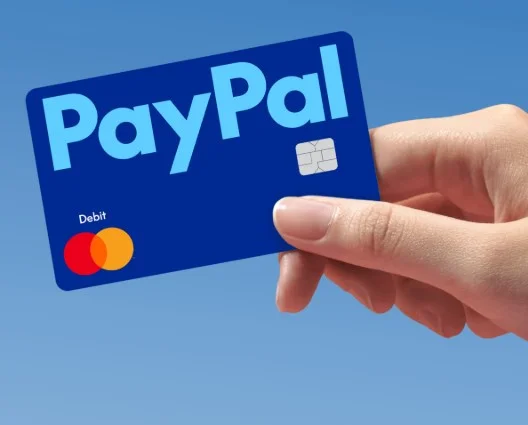
The expansion of PayPal’s financial services from pure digital payments to integrated credit solutions marks a turning point in how consumers engage with both online and offline spending. The company’s decision to introduce a physical PayPal card tied to its credit offering reflects a broader trend: the merging of digital convenience with tangible consumer finance. This evolution is not just about extending credit; it’s about creating an ecosystem where users can move seamlessly between e-commerce and brick-and-mortar transactions.
From Online Credit to Hybrid Payment Solutions
The PayPal service started life as an online payments service. It enabled users to transfer funds online – without the need for traditional banking services. PayPal is now a fully-fledged financial service with a host of products and services at its disposal. For example, the company’s PayPal Credit service provides customers with the opportunity to pay for their online purchases later. This has a number of benefits, and has a huge impact on consumer expectations when it comes to paying online. For example, it means that customers want to be able to pay online as quickly as possible – while also having the option to spread the cost of their purchase over time.
The introduction of PayPal Credit has influenced digital commerce by enabling customers to buy now and pay later for their online purchases at millions of merchants, while merchants have seen an increase in conversion rates due to a decrease in cart abandonment resulting from the merchants’ upfront payment constraints having been removed. As the competition in the fintech market has intensified, PayPal has been pushed by the market towards a hybrid model that combines the benefits of digital credit with the well-known advantages of physical payment instruments such as cards.
By merging online and in-store shopping experiences into a single account balance, rewards and credit line, hybrid solutions created for the consumer generate greater unification between channels and thus increased brand loyalty within PayPal’s ecosystem. PayPal’s new hybrid solutions are shifting to a unified payment solution that fits consumer needs.
Integration of Credit with Physical Payment Infrastructure
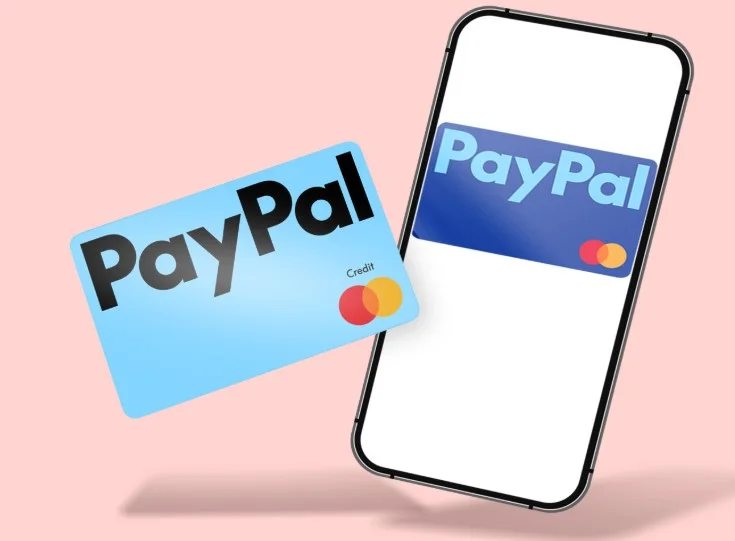
The extension of PayPal Credit to a physical PayPal branded card is a strategic move to make the PayPal experience more accessible to consumers by making it possible to use everywhere – online through mobile apps and in physical stores at checkout.
The credit functionality embedded in the tangible card is aligned with the new trend of consumers preferring contactless payments and cards and mobile linked accounts over cash and traditional bank credit lines. The card also offers the users who prefer to transact physically, the option of using their PayPal balance or credit on the card, without the need of reaching for their mobile phones.
Digital wallets and tokenisation are important elements to enable fast and secure online and offline transactions across channels. Tokenisation of payment data replaces sensitive payment information such as credit or debit card numbers with an encrypted token to be used for the transaction. The same level of security as used within the PayPal app is then applied for in-store contactless payments or online purchases made using a customer’s card.
The Structure and Functionality of the PayPal Card
The PayPal card is more than a simple new credit card, it is a physical manifestation of your online wallet. The PayPal card structure reflects the marriage of traditional payment processing with the latest in financial technology.
Technical Framework Behind the PayPal Card
The PayPal Card is based on the technical backbone of well established global networks like Mastercard or Visa. This enables acceptance at more than millions of merchants worldwide in shops, on the phone, online or via mobile. Compatibility with numerous payment terminals as well as conformity with international standards for the processing of card transactions is guaranteed.
Your PayPal card is linked to your existing PayPal account balance or credit facility. When you use your PayPal card, it instantly syncs with your PayPal account information via real-time cloud-based communication systems. Your purchases are updated instantly in your PayPal Spending app dashboard. No manual updates are required.
Security is a top feature of CardHQ. The multiple layers of encryption, on both the stored and transmitted information, help keep users at peace. The sophisticated program that detects potential fraud is also always monitoring for unusual patterns in activity. With two-factor authentication (2FA) on settings and high-risk activities like withdrawing cash or making large purchases, security is always CardHQ’s main priority.
User Experience and Transaction Flow
Intuitively managing your credit via the PayPal card is similar to managing credit via your average app. Users can view the amount of funds that are available to them, see where they’re spending money, and even set up alerts that remind them of when they have to pay back their dues to PayPal.
Adding your PayPal Credit to your physical card involves a few simple steps such as activating your card from the PayPal Mobile App, selecting your credit or your balance to be your app’s default funding, and finally, confirming your identity through PayPal’s verification processes the first time you use your new card.
For Authorisation Online transactions are processed by storing your details and authorising each transaction through an encrypted API when you make an online purchase. For in-store transactions Authorisation is processed by chip-and-PIN or contactless payment. The rules for each network apply. You are able to view all your spending online, via your account dashboard.
Strategic Implications for the Digital Payments Landscape
As hybrid models start to gain traction PayPal’s competitive advantage over traditional lenders is becoming increasingly apparent.
Competitive Positioning Against Traditional Credit Providers
In contrast to the usual bank-issued credit card, which has a fixed interest rate and no room for flexibility, the PayPal model is based on maximum transparency and flexibility. Users can always repay their amounts due directly within their PayPal account, without having to go through other platforms or institutions.
Cashback rewards tied to customers’ digital activity – such as shopping at specific merchants – are offered to encourage customers to remain within PayPal’s ecosystem and avoid using other external banking channels. These rewards are a closed-loop strategy that helps PayPal retain customers and create recurring transactions between digital and physical environments.
Impact on Fintech Partnerships and Merchant Ecosystems
Merchants benefit by having PayPal’s unified payment model integrated once into their online store and POS systems. They receive payments quicker, and serve customers who prefer to receive alternative payment options such as installment payments using the customer’s existing PayPal account.
This development offers opportunities for collaboration with POS technology providers to integrate fintech capabilities in retail hardware to create software-enabled finance within traditional commerce infrastructure.
Even more opportunities are emerging for fintech startups offering embedded finance. Connecting merchant platforms by means of APIs to hybrid credit systems accelerates the innovation cycles of payment automation and customer analytics.
Regulatory and Risk Considerations in Hybrid Credit Models
Innovation is the engine that drives growth but compliance with regulations of individual jurisdictions is a crucial constraint when operating across borders.
Compliance with Financial Regulations Across Jurisdictions
As PayPal extends credit by issuing physical instruments, it becomes subject to a variety of laws including banking, consumer protection and electronic money laws in different parts of the world. In addition to these laws, the company is also subject to a variety of disclosure requirements that differ by region with respect to fees, interest rates and other terms and conditions as well as consumer dispute resolution processes.
Data protection frameworks from around the globe including the European Union’s GDPR require payment data that is processed through multiple channels to be handled according to strict criteria. These criteria require the data to be encrypted during transfer and stored in a secure manner as per the requirements of ISO/PCI-DSS.
Our KYC (Know Your Customer) / AML (Anti-Money Laundering) obligations enable us to verify a customer’s identity on an ongoing basis using biometric verification or document verification tools prior to granting access to a credit line. This helps to protect our customers from potential fraud whilst ensuring that we comply with all relevant regulators’ requirements with respect to transparency.
Risk Management in Multi‑Channel Credit Operations
Our multiple digital platforms and physical cards create new complexities of risk and fraudulent behavior. We need to be able to monitor all transaction activity, including unusual behavior on regular activity, to determine whether it is a fraudulent activity or not. The monitoring of such activity can be enabled through the use of advanced AI-powered analytics that is able to spot unusual behavior in a number of different transaction types such as taps and chip insertions at terminals.
Machine learning-enabled flags are raised by the system for any unusual activity such as location changes and rapid high-value purchases which are then manually investigated and approved or declined by a human.
Maintaining users’ trust is not only about detecting fraud but also about how you communicate to them. Warning users in real time about suspicious activity going on in their account will make users confident that their account is still safe even as you open up more ways for users to access their account.
Future Outlook: Redefining Consumer Credit Accessibility
Hybrid solutions are fundamentally changing what consumers expect from finance today: immediate availability combined with universal usability.
The Convergence of Digital Finance and Physical Commerce
Fintech innovation is leading to a convergence between ‘digital wallets’ and traditional ‘spend cash’ products and also the experience that consumers expect to receive in retail environments is increasingly becoming omnichannel. Consumers now can check out online from a retail site using a pre-stored set of login credentials, and then a few minutes later be paying for a coffee in a café using their PayPal card, both transactions are drawn from the same balance.
Future versions of this payment card will most likely include the functions of microcredit directly on the card or link up a subscription-based repayment plan, that automatically adjusts with every purchase.
Long-Term Implications for Financial Inclusion and Market Growth
In order to further increase inclusion of the underbanked by means of physical access points to digital credit for individuals who do not have a bank account but a smartphone with a payment app like PayPal, physical instruments that are accepted worldwide but managed 100% digital can be offered to them. Thus, big differences between the formal finance systems can be closed.
The emerging trend in fintech will have a bearing on global infrastructure as the aforementioned hybrid models are increasingly becoming the norm that the leading players in the sector rely on in order to facilitate cross-border expansion while remaining compliant with the local legislation.
Ultimately, innovations around products like the PayPal card signal how legacy boundaries between banks, tech firms, and retailers are dissolving—ushering in an era where financial participation feels seamless regardless of device or location.
FAQ
Q1: How is PayPal card different from bank issued cards? A: PayPal card connects to your PayPal account balance / credit line instead of linking to a customer’s bank relationships and synchronizes in real time across all devices where customer logs on.
Q2: Repayment management is done within the app itself or through the main interface of the app where users can also track their transactions. A: Repayment management is done within the same interface where users manage their transactions.
Q3: How does tokenization improve security during transactions? A: Tokenization replaces sensitive details like card numbers with encrypted tokens so actual data never transmits during purchases either online or offline.
Q4: Are there any special benefits for merchants using this system? A: Yes. Merchants benefit from faster settlement and from easier integration as all payments are managed through one platform, for online as well as for POS.
Q5. Can this model help people without bank accounts access credit? A. Yes. Unlinked digital accounts and physical cards can help provide unbanked individuals with practical access to financial services of the mainstream formal financial sector while they are still without a full service bank.