REACH chemical compliance for importers and suppliers selling into the EU

What REACH chemical compliance means in trade
REACH chemical compliance means showing that substances, mixtures and articles placed on the EU and EEA market meet the obligations of Regulation (EC) No 1907/2006 on the registration, evaluation, authorisation and restriction of chemicals. For importers and suppliers, the practical question is not simply whether a product is “REACH compliant.” It is whether the correct legal entity has met the correct duty for the specific substance, concentration, volume, use and product type.
The European Commission describes REACH as the main EU law for controlling chemical risks to human health and the environment. ECHA guidance makes clear that the regulation can affect substances on their own, substances in mixtures, and substances present in finished articles. In day-to-day trade operations, this is why REACH due diligence often involves customs, purchasing, quality, product engineering and regulatory teams at the same time.
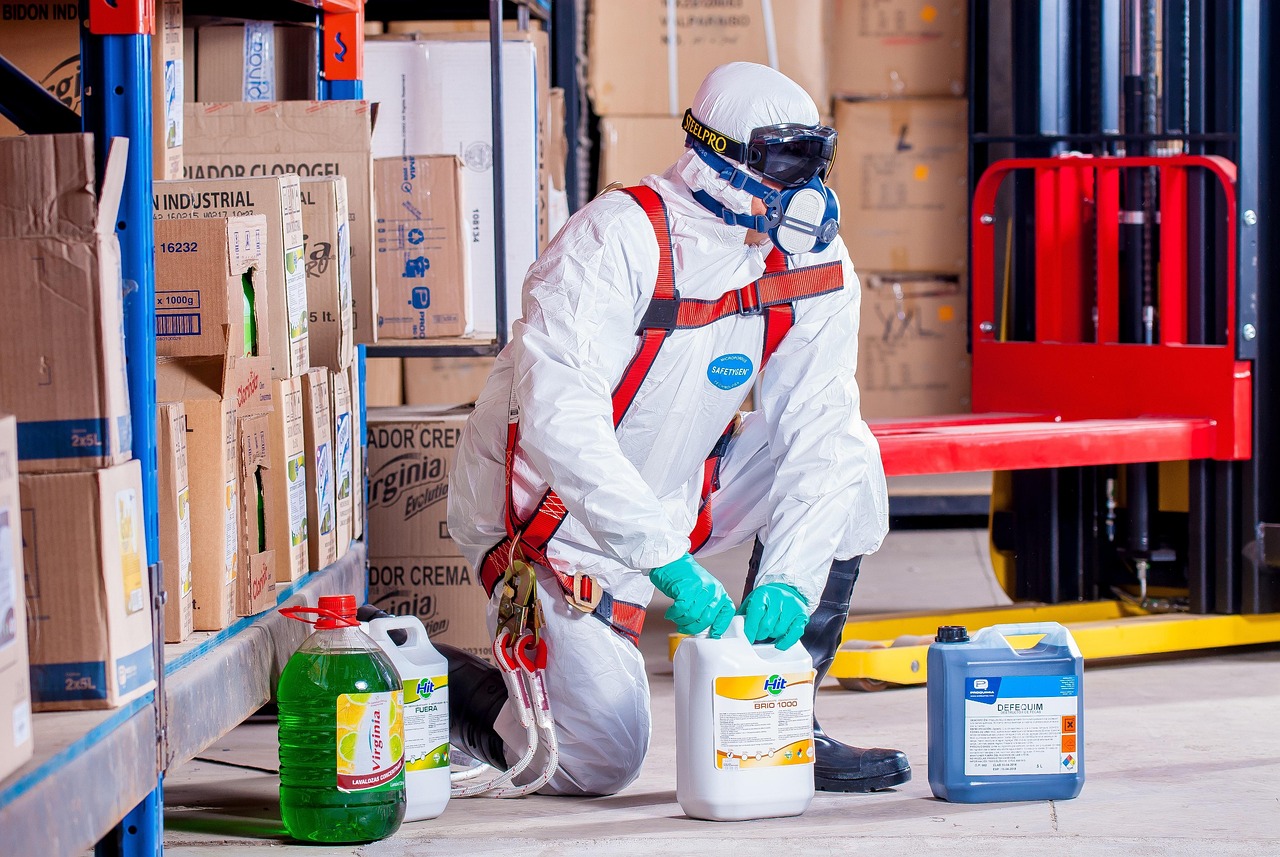
For trade businesses, the most workable starting point is to separate four questions: who is the EU duty holder, what type of product is being supplied, which chemicals are present, and whether any Candidate List, restriction, authorisation, registration or safety data sheet obligation is triggered.
Who carries the obligation when goods are imported
REACH and CLP obligations apply to legal entities established in the EU or EEA. When goods come from outside the EEA, the EU importer normally carries the core REACH responsibility unless a valid EU-based only representative has taken over certain importer duties for substances under REACH. This point matters for exporters in the United States, China, India, Vietnam and other non-EEA locations: a non-EEA supplier can support compliance, but it is usually not the direct REACH registrant unless it acts through an only representative.
ECHA guidance states that non-EU manufacturers, formulators and article producers may appoint an only representative established in the EU or EEA. The only representative can fulfil importer obligations for covered substances, but the appointment must be specific enough to show the substances, supply channels and tonnage covered. EU importers also need evidence that their own imports are included in the only representative arrangement.
In practice, purchase contracts and supplier declarations should not stop at broad wording. They should identify whether the supplier is providing a registered substance, a mixture whose component substances are registered where required, or an article that has been screened for substances of very high concern and restrictions. For more updates on trade compliance topics, see the Compliance section.
The main REACH checks for imported products
REACH duties differ sharply depending on whether the traded item is a substance, mixture, article or complex object. A finished consumer product may not require chemical registration by the article importer, but it may still trigger SVHC communication duties, SCIP notification, Annex XVII restrictions or documentation requests from customers.
| Trade item | Main REACH compliance question | Typical evidence to request |
|---|---|---|
| Substance on its own | Is the substance registered by the EU manufacturer, EU importer or only representative when imported or manufactured at one tonne or more per year, unless an exemption applies? | REACH registration number, safety data sheet, supplier identity, use coverage and tonnage confirmation. |
| Mixture | Are the substances in the mixture registered where required, classified correctly and communicated through a compliant SDS? | SDS under the current EU format, composition information where needed, registration coverage and CLP classification data. |
| Article | Does any component article contain a Candidate List SVHC above 0.1% weight by weight, and do any Annex XVII restrictions apply? | Article-level material declaration, SVHC statement, test reports for high-risk materials and restricted substance review. |
| Complex object | Has the 0.1% SVHC threshold been assessed at article level rather than averaged across the whole product? | Bill of materials, component-level supplier declarations and targeted laboratory testing. |
| Goods containing restricted substances | Does Annex XVII restrict the substance in that product type, concentration or use? | Restriction screening, test results, supplier controls and product specification limits. |
SVHC duties are often the first issue for finished goods
Many importers first encounter REACH through substances of very high concern, commonly called SVHCs. ECHA’s Candidate List is the trigger point. After ECHA’s 4 February 2026 update, the Candidate List contained 253 entries, including newly added substances such as n-hexane. Because the list changes over time, product declarations should show the list version or review date rather than rely on a timeless statement.
Under REACH Article 33, suppliers of articles must provide sufficient information to allow safe use when a Candidate List substance is present above 0.1% weight by weight. At minimum, this information includes the name of the substance. The threshold is applied to each article, including component articles in complex objects, not only to the final assembled product as a whole.
Article 7(2) creates a separate notification duty for producers and importers of articles when a Candidate List substance is present above 0.1% weight by weight and the total amount of that substance in relevant articles exceeds one tonne per year. ECHA guidance says notification is generally due no later than six months after the substance is included in the Candidate List, unless an exemption applies, such as already registered use or excluded exposure under normal or reasonably foreseeable conditions.
The Waste Framework Directive adds another layer. Since 5 January 2021, EU suppliers of articles containing Candidate List substances above 0.1% weight by weight have had to submit information to ECHA’s SCIP database. SCIP is not the same as REACH registration, but the trigger depends on the same Candidate List and article-level SVHC concept. Importers therefore need data structured well enough to support both customer communication and database notification where required.
Restrictions and authorisation need separate screening
A common mistake is to treat the Candidate List as the whole of REACH compliance. It is not. Annex XVII restrictions can ban or limit the manufacture, placing on the market or use of substances, mixtures and articles under specified conditions. These restrictions can apply even when a substance is not on the Candidate List, and they can apply directly to finished goods.
For importers, Annex XVII screening should be product-specific. A generic chemical inventory is useful, but it may not answer whether a substance is restricted in a textile, toy, jewellery item, adhesive, coating, electronic accessory or another article category. Restrictions can contain concentration limits, use conditions, product-scope definitions and exemptions. A supplier statement that says “REACH passed” without identifying the restriction scope is weak evidence.
Authorisation under Annex XIV is different again. It focuses on substances of very high concern that require authorisation for specified uses after a sunset date. For trade teams, authorisation is most relevant when importing or using the substance itself or a mixture containing it within the EU. It should not be confused with a general pre-approval for every imported article. Where an Annex XIV substance appears in an article supply chain, importers should still consider SVHC communication duties and whether a restriction has been or may be introduced.
Safety data sheets remain central for substances and mixtures
For substances and mixtures, a safety data sheet is often the first document a customer, distributor or authority asks to see. ECHA guidance states that SDSs provide information on properties, hazards, handling, disposal, transport, first aid, fire-fighting and exposure control measures. A compliant SDS is not just a formality; it is the main route for communicating risk management measures down the supply chain.
Commission Regulation (EU) 2020/878 replaced Annex II to REACH for SDS compilation and has applied since 1 January 2021, with older non-compliant SDSs allowed only until 31 December 2022. By 2026, a newly issued EU SDS should therefore follow the updated format. Where exposure scenarios are required, they should be attached or otherwise supplied in a way that allows downstream users to understand covered uses and controls.
Importers should check that the SDS language matches the Member State where the substance or mixture is placed on the market, that emergency and supplier details are appropriate, and that the classification is consistent with current CLP rules. If a supplier sends a document labelled “MSDS” with outdated classification phrases, missing EU supplier data or no REACH registration information where expected, it should be treated as a red flag rather than filed without review.
Why evidence expectations are increasing
REACH enforcement is no longer limited to paperwork checks after goods are already circulating. ECHA reported on 10 December 2025 that inspectors in 29 EEA countries carried out 2,603 targeted import controls under the REF-12 enforcement project. The project checked imported substances, mixtures and articles against REACH registration, restriction and authorisation requirements. ECHA reported that one out of three substances in mixtures checked in the project was missing a REACH registration, and that some imported consumer products contained restricted hazardous substances above allowed limits. See also: Customs.
The trade implication is clear: customs data, importer identity, product descriptions and regulatory documents are becoming more connected. If an importer cannot link a product to its supplier declaration, composition data, SDS, registration coverage or test report, the compliance file may fail even if the product was designed with low-risk materials.
There is also market divergence to manage. Great Britain operates UK REACH separately from EU REACH. HSE guidance says GB-based legal entities importing or manufacturing substances in Great Britain at one tonne or more per year may need a UK REACH registration, unless an applicable provision or only representative arrangement covers the substance. Suppliers shipping to both the EU and Great Britain should avoid assuming that one REACH statement automatically covers both regimes.
A practical REACH compliance file for importers and exporters
A strong REACH file is built before shipment, not after a customer asks for evidence. For many importers and exporters, the following structure is more reliable than collecting random certificates:
- Product classification: identify whether the item is a substance, mixture, article or complex object.
- Role mapping: confirm the EU importer, distributor, downstream user, only representative or GB importer role.
- Substance inventory: collect CAS numbers, EC numbers, concentration ranges and material locations where commercially and legally possible.
- Registration coverage: confirm whether substances imported at one tonne or more per year are registered or exempt.
- SVHC review: screen against the current Candidate List and state the review date.
- Article-level assessment: evaluate components separately where the product is a complex object.
- Restriction screening: check Annex XVII against product category, use and concentration limits.
- SDS control: keep current EU-format SDSs for substances and mixtures, including exposure scenarios where required.
- SCIP readiness: collect article identifiers, material categories, safe-use information and SVHC location data when the SCIP trigger is met.
- Change management: require suppliers to notify material, formulation, process or sub-supplier changes before shipment.
Testing can support the file, but it should not replace supply chain information. Laboratory tests are useful for high-risk materials, recurring products and restricted substances with measurable limits. They are less effective as the only control for complex supply chains because a test report may cover only the sample tested, not every production batch or every component.
Common gaps that undermine REACH chemical compliance
The most common documentation gap is a blanket declaration that says a product is “REACH compliant” without identifying the version of the Candidate List, the product scope, the tested materials or the responsible legal entity. Such a declaration may satisfy a sales portal checklist, but it is not enough for a serious importer file.
Another frequent problem is averaging SVHC concentration across a full product. For complex objects, the 0.1% threshold should be considered at the article or component article level. A connector, coating, cable sheath, plastic housing or gasket may exceed the threshold even when the total assembled product appears below it.
Importers also confuse RoHS and REACH. RoHS focuses on specified hazardous substances in electrical and electronic equipment. REACH covers a broader chemical framework, including registration, SVHC communication, authorisation and restrictions across many product categories. A RoHS test report can be useful, but it does not automatically prove REACH compliance.
Finally, companies often forget review cadence. A declaration issued in 2023 may not reflect substances added to the Candidate List in 2025 or 2026. Importers should set review triggers for Candidate List updates, Annex XVII amendments, formulation changes, new suppliers, new countries of sale and customer-specific compliance requests.
Frequently asked questions
Is there an official REACH certificate?
REACH is not normally proven by one official certificate for finished goods. Compliance is demonstrated through the correct combination of registration coverage, safety data sheets, SVHC declarations, restriction testing, article-level material data, SCIP information where required and contractual supplier controls.
Does REACH apply to finished articles?
Yes, but not in the same way as it applies to substances and mixtures. Finished articles may trigger SVHC communication, Article 7(2) notification, SCIP submission and Annex XVII restriction obligations. Registration may also be relevant if a substance is intended to be released from an article or if other substance-specific conditions apply.
How often should importers update REACH declarations?
At minimum, declarations should be reviewed when the Candidate List changes, when Annex XVII is amended, when materials or suppliers change, or when a product is introduced into a new EU market. ECHA commonly updates the Candidate List through periodic additions, so a declaration should include a review date.
Does an EU REACH statement cover Great Britain?
Not automatically. UK REACH applies in Great Britain, while EU REACH applies in the EU and EEA. Supply chains serving both markets should confirm whether registration, SVHC and article notification duties are covered separately under each regime.
What should an importer ask from a new supplier?
Ask for product classification, EU-format SDSs for substances and mixtures, REACH registration coverage where relevant, current SVHC declarations at article level, Annex XVII screening, test reports for high-risk restricted substances, SCIP-related data where applicable and a commitment to notify chemical or material changes.
Source references include public guidance and regulatory materials from ECHA, the European Commission, EUR-Lex and the UK Health and Safety Executive.