How to assess China magnesium die casting suppliers for export sourcing
China magnesium die casting suppliers in context
China magnesium die casting suppliers often appear on an importer’s shortlist when a project calls for lightweight housings, brackets, structural frames, electronics parts, or automotive components. The appeal is not only manufacturing cost. It is also the concentration of primary magnesium production, die casting equipment, tooling, machining, surface treatment, and export logistics within one industrial ecosystem.
Magnesium, however, is not a simple drop-in substitute for aluminum. A suitable supplier must understand alloy selection, fire and dust safety, melt protection, porosity control, corrosion protection, and customer-specific inspection rules. For buyers, the safer sourcing approach is to qualify suppliers by part complexity, process evidence, and risk controls rather than by a generic supplier ranking.
The U.S. Geological Survey Mineral Commodity Summaries 2026 estimated China’s 2025 primary magnesium smelter production at 950,000 metric tons out of a rounded world total of 1.1 million metric tons. The same source estimated China’s 2025 smelter capacity at 1.48 million metric tons out of 1.8 million metric tons worldwide. This upstream position helps explain why China remains important in magnesium casting supply chains, although it does not prove the capability or quality level of any individual die caster.
What recent industry signals mean for buyers
Recent public industry information points to a more developed magnesium casting chain in China. The organizer of CHINA DIECASTING & CHINA NONFERROUS reported that its July 15–17, 2026 Shanghai exhibition covered 52,000 square meters, gathered 653 exhibitors, and attracted 24,907 trade visitors from 63 countries and regions. The event report described displays across magnesium alloy forming, giga casting, molds, materials, intelligent manufacturing systems, and end-use applications.
For buyers, this is useful market context. Magnesium die casting is being discussed more often in connection with electric vehicles, electronics, lightweight structures, and integrated casting. Still, trade show activity is only a signal. It does not prove that a supplier can meet a specific drawing, tolerance, leak test, salt-spray requirement, or PPAP package. The supplier still has to demonstrate process capability on the part family you plan to source.
For more supplier-focused trade articles and sourcing notes, visit the DumbOpus Suppliers section.
Define the part before asking for quotations
Many magnesium sourcing problems start before the first quotation. A buyer sends a 3D file and asks for a price, but the file does not define alloy, casting process, machining datum, finish, inspection standard, or end-use load case. The result is a set of fast quotations that are difficult to compare and easy to misunderstand.
Before contacting suppliers, prepare a short technical brief that covers the following points:
- Application and function: state whether the component is cosmetic, structural, pressure-tight, heat-dissipating, EMI-shielding, or part of an automotive safety-related assembly.
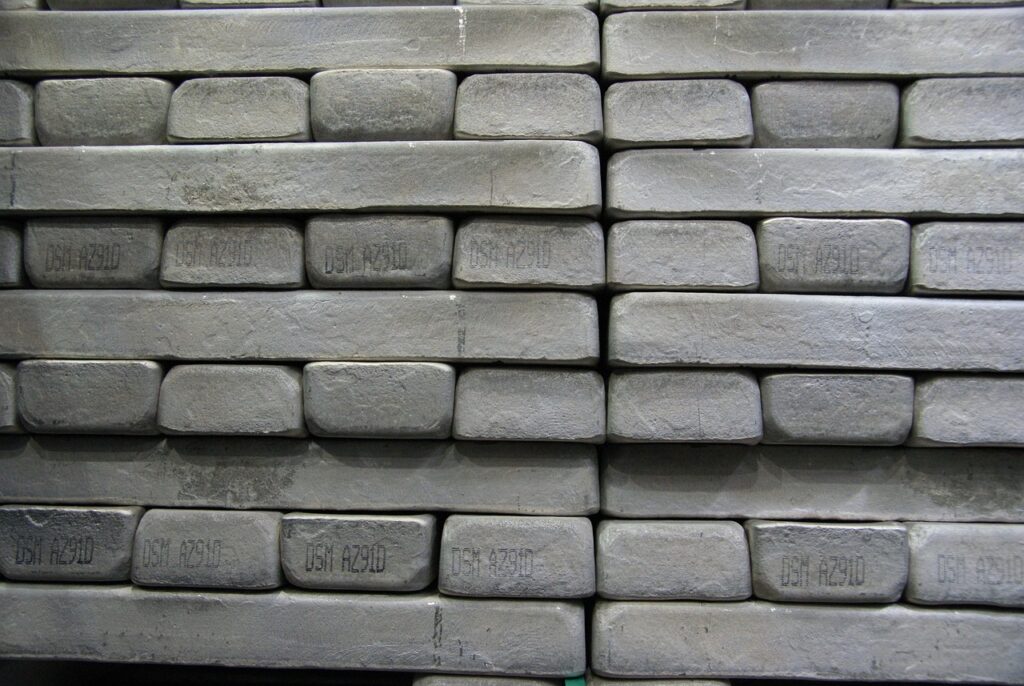
- Alloy requirement: common magnesium die casting alloys may include AZ91D, AM50A, or AM60B, but the final choice should follow engineering performance, corrosion, ductility, and customer specification requirements.
- Process route: identify whether high-pressure die casting, vacuum-assisted die casting, semi-solid molding, rheocasting, or another route is expected.
- Annual volume and launch curve: tooling, cavity count, automation, and inspection planning depend heavily on volume.
- Critical-to-quality features: mark datum surfaces, sealing areas, threaded bosses, thin ribs, pressure zones, coating surfaces, and any no-porosity or low-porosity regions.
- Inspection package: define whether you need first article inspection, CMM reports, X-ray or CT inspection, material certificates, coating thickness tests, salt-spray tests, leak tests, or PPAP documentation.
A capable supplier should challenge missing information. If every supplier accepts the same incomplete file without design-for-manufacturing comments, the fastest response may not be the safest option.
Supplier qualification checklist
Magnesium die casting qualification should combine business verification, engineering capability, process control, and export execution. The checklist below can be used during email screening, video audits, or on-site visits.
| Area to verify | Evidence to request | Why it matters |
|---|---|---|
| Legal and export identity | Business license, export registration, factory address, English company name, bank account consistency | Reduces trading fraud, identity mismatch, and payment risk. |
| Magnesium process experience | Part families, alloy history, machine tonnage range, melt handling procedure, case photos with confidential details removed | Magnesium needs different safety and process controls from aluminum or zinc. |
| Tooling and DFM | Gate design review, flow simulation summary, shrinkage and ejector strategy, tool maintenance plan | Many defects are locked into the die design before production begins. |
| Material control | Incoming ingot certificates, alloy traceability, spectrometer records, batch coding | ASTM B93/B93M covers magnesium alloy ingots for casting, while ASTM B94-18(2025) covers magnesium-alloy die castings. |
| Porosity and soundness control | X-ray, CT, sectioning, leak test, acceptance samples, defect boundary agreement | NADCA guidance treats porosity acceptance as application-specific; generic promises are not enough. |
| Machining and secondary operations | CNC list, fixture plan, deburring method, dust collection, chip handling, fire-control procedure | Magnesium chips and dust create safety risks that must be actively managed. |
| Surface protection | Conversion coating, painting, powder coating, plating partner records, salt-spray protocol | Magnesium corrosion performance depends strongly on alloy, design, pretreatment, and coating control. |
| Automotive quality system | ISO 9001 certificate, IATF 16949 certificate where applicable, control plan, FMEA, MSA, SPC, PPAP examples | Automotive and Tier 1 programs usually require structured defect-prevention systems, not only final inspection. |
Quality and safety risks to discuss early
Porosity is usually the first major issue. Die casting can produce gas porosity, shrinkage porosity, cold shuts, and inclusions. ASTM E505 provides reference radiographs for aluminum and magnesium die castings, while many buyers also use customer-specific acceptance limits. The practical point is that the drawing should state where porosity matters. A sealed boss, machined sealing face, or threaded hole may need a much tighter standard than a nonfunctional rib.
Corrosion protection is the second issue. Magnesium’s low density is attractive, but exposed magnesium alloys need carefully controlled surface protection. Buyers should not approve a supplier based only on attractive as-cast samples. Ask how the supplier controls pretreatment, coating adhesion, cross-contamination, salt-spray testing, packaging humidity, and handling marks after machining.
Combustible dust and fire safety are non-negotiable. OSHA lists magnesium among combustible metal dust examples, and NFPA 484 is widely referenced for combustible metals safety. A credible plant should be able to explain housekeeping, chip segregation, dust collection, grounding, hot-work control, fire media, operator training, and emergency response. This is especially important when the supplier also performs CNC machining, grinding, polishing, or deburring.
Cover gas and environmental controls should be transparent. The U.S. Environmental Protection Agency has described sulfur hexafluoride, or SF6, as a potent greenhouse gas historically used to protect molten magnesium from oxidation. EU Regulation 2024/573 prohibits SF6 use in magnesium die casting and magnesium die-casting alloy recycling. Even when production is outside the EU, export buyers serving European or global OEM programs should ask suppliers how melt protection is controlled and documented. See also: Compliance.
Compare supplier models before choosing one
Not every supplier type fits the same project. The lowest quote may come from a company that outsources the most critical step. That can be workable for simple parts, but it becomes risky when the part needs design support, traceability, or automotive documentation.
| Supplier model | Best fit | Main caution |
|---|---|---|
| Trading company | Low-complexity sourcing, small trial orders, buyers needing English communication | May not control tooling, melt, or inspection directly. |
| Toolmaker plus die caster | New product development, DFM changes, tooling-intensive parts | Confirm whether machining and coating are internal or outsourced. |
| Casting and machining factory | Parts with tight datums, threaded features, sealing faces, or assembly operations | Audit magnesium chip, dust, and fire-control procedures. |
| Automotive-focused supplier | High-volume programs requiring APQP, PPAP, FMEA, SPC, and traceability | May be less flexible for small batches or frequent design changes. |
| Integrated magnesium group | Programs where alloy supply, recycling, casting, and downstream processing need coordination | Do not assume integration automatically means better part-level quality. |
Commercial and logistics questions importers should ask
Once the technical shortlist is clear, compare commercial terms in a structured way. Ask each supplier to separate tooling cost, sample cost, unit price, machining cost, coating cost, inspection cost, packing cost, and export charges. This makes it easier to compare total landed cost instead of focusing only on the ex-factory unit price.
Important commercial questions include:
- Who owns the die, inserts, trim tool, gauges, fixtures, and CNC programs after payment?
- What are the engineering change rules after tooling kickoff?
- How many T0, T1, and pre-production sample rounds are included?
- What happens if X-ray, leak testing, or coating tests fail during validation?
- Which Incoterms are offered, and who controls export booking and cargo insurance?
- How will the supplier package magnesium parts to prevent moisture damage, coating abrasion, and mixed-lot confusion?
- Which customs broker will confirm HS classification for the finished part?
Do not classify a finished magnesium casting only by looking at raw magnesium metal tariff tables. Many finished components are classified by function, end use, or article category rather than by raw material alone. Importers should confirm current classification, duty exposure, and any trade remedy issues with a licensed customs broker before purchase orders are placed.
A practical shortlisting workflow
- Start with a technical brief. Include drawings, 3D files, alloy expectations, finish, annual volume, and inspection requirements.
- Screen for magnesium-specific experience. Separate general aluminum die casters from plants that regularly cast magnesium alloys.
- Request a DFM response before a final price. Strong suppliers will comment on wall thickness, draft, ribs, gates, ejector marks, machining stock, and porosity risk.
- Check certificates, but do not stop there. ISO 9001 or IATF 16949 certificates should match the legal entity and production site. Real controls appear in control plans, inspection reports, and production records.
- Approve samples by function. Do not rely on visual appearance alone. Use CMM, material analysis, X-ray or CT, coating, assembly, leak, and durability checks as required.
- Audit safety for machined magnesium. Confirm dust collection, chip storage, fire media, training, and emergency procedures.
- Lock the acceptance standard. Keep signed samples, radiographs, inspection plans, and boundary samples where subjective defects could cause disputes.
- Scale gradually. Move from prototype to pilot to mass production with defined yield, capability, and corrective-action thresholds.
The best sourcing outcome is not simply finding a factory that can pour magnesium. It is finding a supplier whose process evidence matches the part’s risk level. For importers, that means combining China’s strong magnesium manufacturing ecosystem with disciplined qualification, documented inspection, and realistic commercial controls.
Frequently asked questions
What are common magnesium alloys for die casting?
AZ91D is widely used where castability and general strength are important. AM50A and AM60B are often considered where ductility and impact performance matter. The final alloy should be selected by engineering requirements, applicable standards, coating plan, and customer specification, not by supplier habit alone.
Are China magnesium die casting suppliers suitable for automotive projects?
Some Chinese suppliers serve automotive and new energy vehicle supply chains, but suitability must be verified by site scope, process capability, IATF 16949 status where required, PPAP experience, traceability, and defect-prevention methods. A supplier’s automotive brochure is not a substitute for a part-specific control plan.
Is magnesium die casting cheaper than aluminum die casting?
Not always. Magnesium can reduce weight and may support thin-wall or integrated designs, but raw material, tooling, melt handling, machining safety, coating, scrap control, and inspection can change the cost picture. Compare total landed cost and functional value, not only unit price.
How can buyers reduce porosity risk?
Define porosity limits by functional zone, involve the supplier during DFM, review gating and venting strategy, use appropriate inspection such as X-ray or CT for critical areas, and keep signed boundary samples. Avoid asking for unrealistically strict porosity limits in areas where they do not affect function.
Should I buy through a trading company or directly from a factory?
A trading company can help with communication and small orders, but direct factory qualification is usually safer for technical magnesium parts. If a trading company is involved, the buyer should still know which factory casts the part, who controls the die, and who is responsible for inspection and corrective action.